Declining crude price translates into lower under-recoveries for OMCs
The government has cut the windfall profit tax on crude oil produced in the country while the levy on exports of diesel and ATF has been hiked, an official notification said. The tax, levied in the form of special additional excise duty or SAED, on domestically produced crude oil was reduced to Rs 6,700 per tonne from Rs 7,100 a tonne. SAED on the export of diesel was increased to Rs 6 per litre from Rs 5.50 a litre and on jet fuel or ATF to Rs 4 per litre from Rs 2, the notification said.

The domestic stock market will continue to monitor the Israel-Iran conflict and its impact on global supplies besides prices of crude oil this week, analysts said. Global trends and trading activity of foreign investors would also drive investors' sentiment during the week.
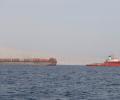
US strikes on Iran's three main nuclear facilities have once again raised concerns that Tehran might shut down the Strait of Hormuz - one of the world's most critical chokepoints, through which a fifth of global oil and gas supply flows.
A surge in international oil prices may translate into an increase in the retail selling price of petrol and diesel in India as oil companies face extreme margin squeeze, sources said. Petrol and diesel prices have remained unchanged for 12 days but now the international rate surge is exerting pressure. Current prices of petrol and diesel in the international market are higher by around $4-6 per barrel as compared to average prices during August. However, no increase in retail prices has been affected by oil companies so far, sources said.

Trump has made it clear: the US will not lift its blockade of Iranian ports until a deal is signed.
The surprise decision of OPEC and its allies, including Russia, to cut oil output may cause an immediate rise in prices, delaying revision in fuel prices in India, industry sources said. The grouping of Organisation of Petroleum Exporting Countries (OPEC) and its allies, called OPEC+, on Sunday decided to further cut oil output by around 1.16 million barrels. The move led to Brent rising by almost 6 per cent to $84.58 per barrel on Monday.

Shares of tyre manufacturers have outperformed broader equity benchmarks, buoyed by multiple tailwinds. Softer raw material prices, an uptick in demand from automakers following the reduction of the goods and services tax (GST) rates, and steady replacement demand have lifted sentiment toward the sector.

Industry experts, analysts say the proposal is 'impractical'. The country's oil refining companies are hopeful that the Organisation of Petroleum Exporting Countries will implement a price band for crude oil which they say will bring more certainty to their operations.

Wholesale price-based inflation rose to a record high of 15.88 per cent in May on rising prices of food items and crude oil. The Wholesale Price Index-based inflation was 15.08 per cent in April and 13.11 per cent in May last year. "The high rate of inflation in May, 2022 is primarily due to rise in prices of mineral oils, crude petroleum & natural gas, food articles, basic metals, non-food articles, chemicals & chemical products and food products etc. as compared to the corresponding month of the previous year," the commerce and industry ministry said in a statement.

Analysts at Morgan Stanley have updated their outlook for the Indian markets, and they now expect the Sensex to hit the 107,000 mark by December 2026 in a bull-case scenario, translating into an upside of 26 per cent from current levels.
With crude oil touching a record $72 per barrel, Indian Oil Corporation is seeking a Rs 5.6 per litre increase in petrol and Rs 7.6 a litre hike in diesel prices to offset the Rs 80-crore (Rs 800-million) revenue loss per day.

The ongoing conflict involving the United States, Israel, and Iran intensified sharply with attacks on critical energy infrastructure across the Gulf, even as US President Donald Trump said he had cautioned Israeli Prime Minister Benjamin Netanyahu against targeting Iran's key South Pars Gas Field.

...is a way out, notes Prem Panicker in his must read blog on the Iran War. What the indefinite extension produces is a prolonged condition of not-war-not-peace, in which oil markets cannot stabilise, Asian refineries cannot plan, European governments cannot stop subsidising consumption they cannot afford, and the next flashpoint -- a seized tanker, a miscalculated drone strike, a Truth Social post that claims too much -- is one news cycle away.
'Indian refiners can operate without Russian crude from a technical standpoint, but the shift would involve major economic and strategic trade-offs'

Ahead of a meeting of oil producers' cartel OPEC, India on Tuesday said the current oil prices are "very challenging" and rates need to be a "little bit sober" lest they impact a consumption-led recovery of the global economy. Oil Minister Dharmendra Pradhan, who last week again urged OPEC to phase out its production cuts, said India is a price-sensitive market and it will buy oil wherever it gets competitive rates. The rebound in international oil prices from lows hit last month on the back of demand recovery has led to a spike in petrol and diesel retail prices in India.

Russian President Vladimir Putin's visit to India this week aims to secure energy supplies, stabilise defence deliveries and ensure bilateral trade continues smoothly despite strong Western sanctions, GTRI said on Tuesday.

Let us start with ourselves. If we can reduce our LPG consumption by half, the problem is solved. Reduce wastage. Alter eating styles. Diversify methods of food preparation, suggests Vice Admiral Biswajit Dasgupta (retd).

Oil imports are a third of India's total import bill.

On the 30-share index, Maruti was the biggest loser, shedding 3.60 per cent. Other major laggards were Yes Bank, IndusInd Bank, Tata Steel, Hero MotoCorp and NTPC -- ending up to 2.33 per cent lower.
The gold and crude oil prices, which have risen to records this year, may ease a little if the US central bank Federal Reserve cut rates at its meeting on Tuesday, an analyst said.The Fed is scheduled to meet today to consider revision of interest rates. The US banking sector regulator has already cut the rate at which it lends to banks by 0.25 per cent to 3.25 per cent at an emergency weekend meeting on Monday.

Billionaire investor George Soros said that although the price of oil is rising due to a combination of rise in demand from China, a weakening dollar and the reduction in supply from the Persian Gulf nations, the main reason for the unprecedented spurt in crude price is speculation.

While OPEC has been unable to agree on an output freeze in an effort to support prices, Iraq was the latest Middle East producer to raise its exports quota

US President Donald Trump and Russian President Vladimir Putin discussed the Iran conflict and its impact on global energy supplies during a phone call.

The rupee recovered 55 paise from its all-time low level to close at 90.38 against the US dollar after a volatile trade on Wednesday, amid suspected aggressive central bank intervention.
Billionaire Mukesh Ambani's Reliance Industries Ltd is estimated to have earned 724 million euros (about Rs 6,850 crore) from exporting fuel made from Russian crude oil to the US in one year, an European think tank said in a report. "From January 2024 to the end of January 2025, the US imported EUR 2.8 billion of refined oil from six refineries in India and Turkey that process Russian crude.

The ceasefire is still technically holding, to the extent that no overt hostilities have been reported yet, but the rhetoric has hardened dangerously. The week ahead will also clarify whether the Islamabad failure was a negotiating tactic or whether Washington has genuinely locked itself into a position from which the only exits are climb-down, escalation, or the slow bleed of a new status quo that nobody chose and nobody controls. Prem Panicker continues his must read blog on the Iran War.

India's peak power demand is projected to hit 270 GW this summer, surpassing last year's record of 250 GW.
With crude oil flirting with the $100 a barrel mark, world's largest oil producer Saudi Arabia is emulating marketing savvy West to showcase oil cartel Organisation of Petroleum Exporting Countries in a new light when it organises the third OPEC Summit in Riyadh this week.

The cost of the war is being counted not in the corridors of power in Washington or Tehran, but in Firozabad's darkened furnace rooms, Howrah's idle casting sheds, and a barbershop in Kochi where the wait is suddenly, inexplicably, an hour long, notes Prem Panicker in his must read blog on the Iran War.
High crude oil prices in 2008 have left the government richer by a few thousand crore rupees. In 2008-09, the government earned "windfall profits" from the petroleum sector as crude oil prices spiked, touching a high of $147 in July 2008.
Asian Paints reported a good performance for the second quarter (July-September) of 2025-26 (Q2FY26), with some help from base effects, despite strong competition and extended monsoon. Volume grew in low double digits in the key domestic decorative paints, and value in that segment grew by 6 per cent. Ebitda (earnings before interest, taxes, depreciation, and amortisation) grew 21 per cent year-on-year (Y-o-Y), and PAT (profit after tax) grew 14 per cent. Asian Paints also defended market share better after several quarters where it had lost ground to Birla Opus.

The government on Monday scrapped 30-month old windfall profit tax on domestically-produced crude oil and on export of jet fuel (ATF), diesel and petrol following a decline in international oil prices. Minister of State for Finance Pankaj Chaudhary tabled a notification in Rajya Sabha scrapping the levy on crude oil produced by firms like state-owned Oil and Natural Gas Corporation (ONGC) and exports of fuels done by companies like Reliance Industries Ltd.
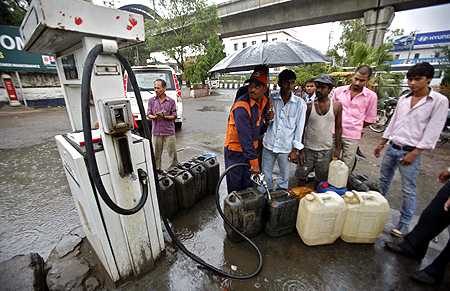
Global supply is staying in excess of demand.
Government will review fuel pricing scenario in October, Petroleum Secretary M S Srinivasan said on Thursday. The petroleum secretary further said, "Situation will be revisited in October when we will take stock of the scenario emerging out of international oil prices." Global crude prices touched a record $145 a barrel, which is expected to push India's oil import bill this year higher by nearly 76 per cent to $110-120 billion.

Muted quarterly earnings, mixed cues from global markets and unabated foreign fund outflows added to the volatility
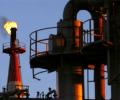
Rising production from OPEC as well as the US also weighing on prices

The government has brought back the windfall profit tax on domestically produced crude oil after international prices firmed up while the levy on export of diesel has been cut to nil, according to an official order. The levy on crude oil produced by companies such as Oil and Natural Gas Corporation (ONGC) is now Rs 6,400 per tonne with effect from Wednesday, the order dated April 18 said. At the last revision on April 4, windfall tax on domestically produced crude oil was cut to nil as international oil prices dipped below $75 per barrel.
 © 2026 Rediff.com - Advertise with us - Disclaimer - Privacy Policy - Sitemap - Feedback - About us - Terms of use - Grievances